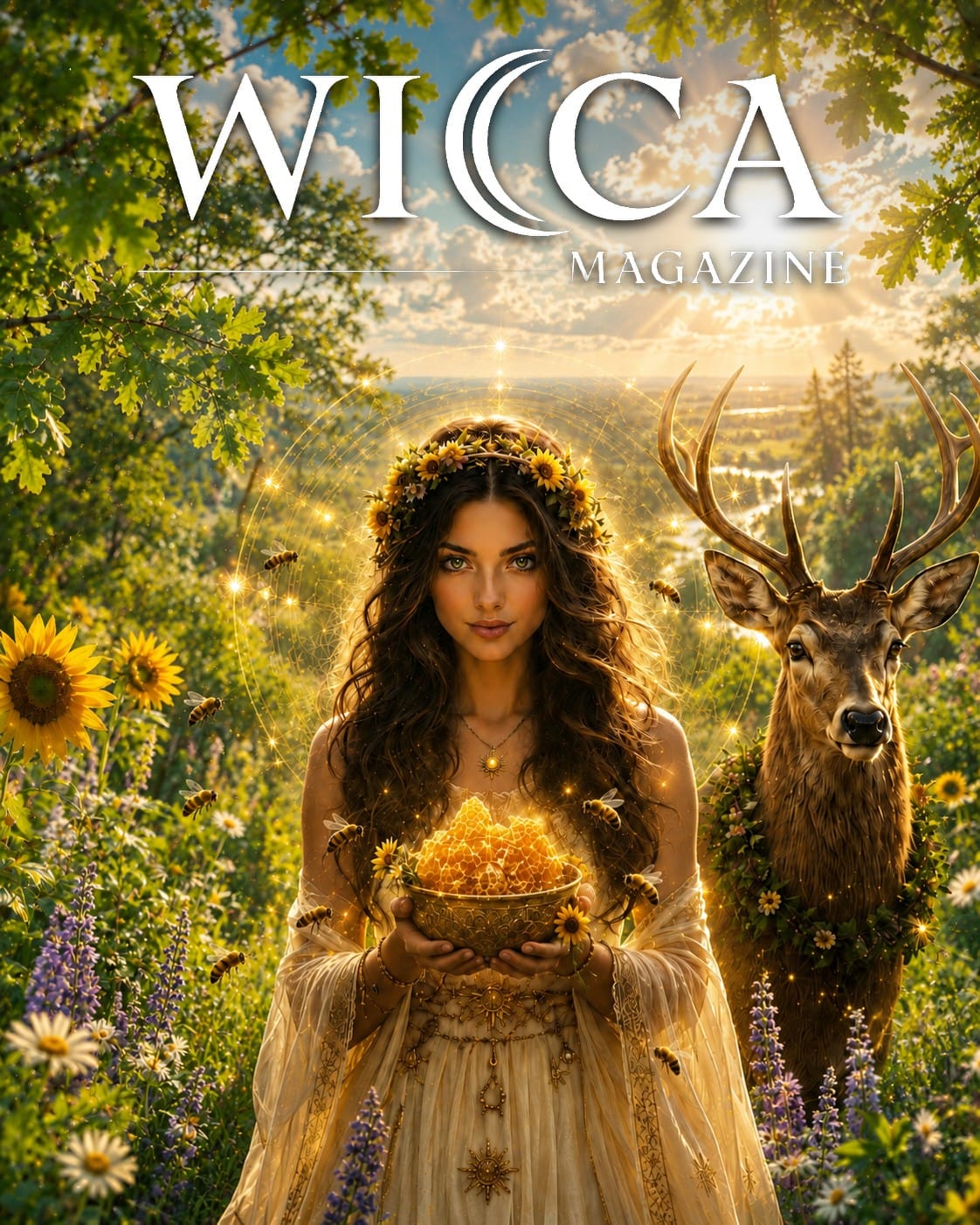
Someone
from somewhere
Purchased Wicca Magazine
just now

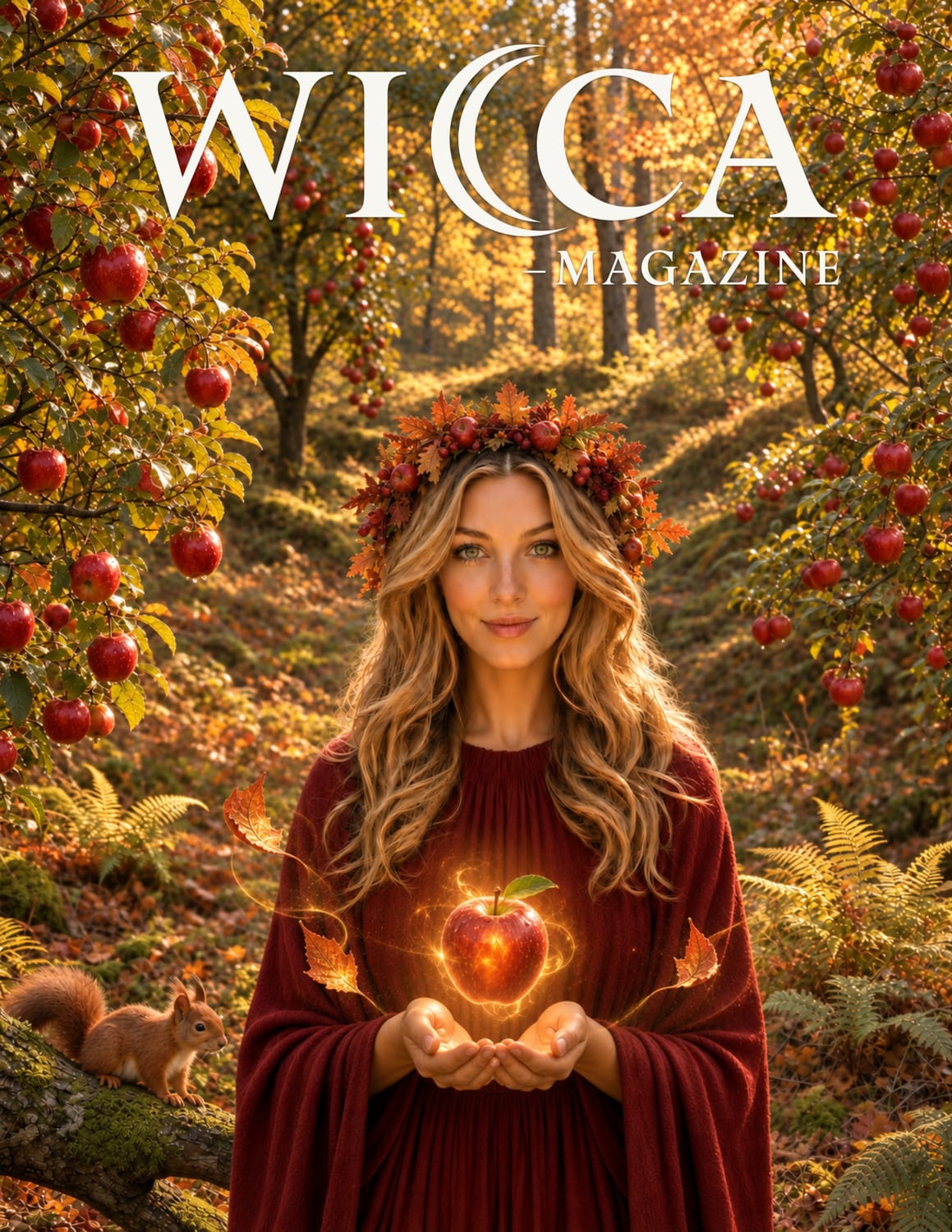
Unlock the Magick of Mabon! - Your Wicca Magazine Issue Awaits
Step into the season of light with Wicca Magazine. Each digital issue is a sacred offering of spells, rituals, and Wiccan wisdom — honoring ancient paths and empowering your modern magick. Your craft, your journey, your magickal sanctuary.
With so many different kinds of magick in the world, it is sometimes hard to know what type you prefer to work with in your practice. Some practitioners prefer folk magick, while others prefer ceremonial magick, and still, others blend the two into a hybrid for their practice. Knowing the difference between folk and ceremonial magick can help you determine which way you lean in your own magickal practice and how you want to incorporate each into your spiritual journey.
Ceremonial Magick
Ceremonial magick is often referred to as high magick or ritual magick. Practitioners of ceremonial magick use very specific rituals and invocations to call upon the spirit realm. The Victorian era was a time when occult groups flourished. The Hermetic Order of the Golden Dawn was among those groups and had a significant influence on ceremonial magick. They were a secret society that embraced ceremonial magickal practices. Eventually, the group fragmented due to conflicts in belief structures as many members were Christian while others brought newer pagan beliefs into the practice.
While it was popularized by the Hermetic Order of the Golden Dawn, the foundations of ceremonial magick are also rooted in older occult teachings with ties to Thelema, Kabbalah, and Enochian magick. While it involves a blend of various occult philosophies and teachings, it has been around for several centuries.
The first documented use of the term ceremonial magick came from a late sixteenth-century translation of Heinrich Cornelius Agrippa’s De Incertitudine et Vanitate Scientiarum Liber. In it, he wrote of the two parts that make up ceremonial magick: goetia and theurgy. Goetia is a practice involving invoking angels and demons, while theurgy is a ritual performed with the intention of invoking the action or evoking the presence of one or more deities, especially with the goal of achieving henosis (oneness or union) and perfecting oneself. Practices containing ceremonial magick have been documented in grimoires found during the early Renaissance and medieval eras. In fact, many of today’s practitioners have studied and used these earliest rituals and ceremonies in their own practice.
Most of today’s ceremonial magick practitioners can trace their roots back to the original teachings of the Golden Dawn. The Ordo Templi Orientis (O.T.O.) was originally modeled on Freemasonry, and when Aleister Crowley took over the leadership, he began to incorporate elements of Thelema. The Builders of the Adytum (B.O.T.A.) were also heavily influenced by the Golden Dawn and the Freemasons. Many groups practice ceremonial magick, but the most famous practitioners are Aleister Crowley, Francis Barret, and Eliphas Lévi.
Ceremonial magick is different from other types of magick as it focuses its intent on invoking and controlling spirits and entities. It involves precision and focuses on the details when working with spells and performing rituals. Often, ceremonial magick involves elaborate rituals and intricate spell casting formats. Ceremonial magick is quite complex as there are richly layered techniques used in invoking the spirits. Included in these techniques is the use of various particular tools, gestures, and symbols. There are often very clear systems of progression within the group that align with a curriculum of knowledge that culminates in formal rites of passage.
For the most part, ceremonial magickal traditions are quite guarded against public consumption. Practitioners tend to keep their groups secret, and entrance into them is quite exclusive. Historically, these groups have been dominated by men, especially those of European descent. However, current ceremonial magick practitioners are much more diverse as the world itself has evolved to be more inclusive. And while the Internet provides a plethora of information on numerous subjects, the information available on ceremonial magick is thought to be incomplete. Its secrets remain well-guarded with practitioners who only impart their knowledge with those who complete training within a formal group.
The ultimate goal of performing ceremonial magick is to become closer to the Divine in whatever form that may manifest itself.
Folk Magick
Folk magick can be found in cultures all over the world. Just as the name implies, folk refers to the people, and folk magick is the magick of the people. Therefore, folk magick has been passed down and modified over time as cultures and people have interconnected. A lot of folk practices have been adopted and adapted in different traditions. And still, other practices have been completely lost. While it is wonderful that people have been able to connect and share their practices, it has caused a bit of confusion when trying to determine precisely what folk magick is and how it differs from other types of magickal practices.
Folk practices are very old and quite adaptable, unlike ceremonial magick. In many places, ancient folk magick practices were developed over a long period of time as people in the community explored the world around them. These practices became a melting pot for other cultures’ practices as various influences ebbed and flowed throughout time. Often, it borrows its practices from many sources, seamlessly crossing from one tradition to another. These practices included seasonal worship, songs, prayers, festivals, celebrations, ceremonies, and day-to-day belief systems.
One component of folk magick that is different from other practices is that folk practices are not religiously based. There is no specific god or goddess, no particular religious belief structure or faith. Anyone of any denomination or religious background can practice folk magick as it is believed folk magick is even older than religion itself. The practices of folk magick have been appropriated as well as preserved by every religion. This preservation of ideas was sometimes incorporated into other religious practices to help people transition between belief structures. For example, many local spirits of the land, such as the wells, hills, and lakes, were replaced by Catholic saints and Christianized. However, the folk themselves, while some may have transitioned to the dominant religion, many simultaneously held on to the belief of the faery folk. Therefore, folk magick and other religions were able to coexist and intertwine with one another.
Folk magick is not practiced in formal, secretive circles; instead, it is a much less rigid, general classification of the craft. It includes all types of folk healers, magickal herbalism, and sympathetic magick.
It tends to focus on matters of everyday, practical concern rather than seeking oneness with the universe or controlling the spirits like ceremonial magick. Folk magick focuses on love spells, finding lost objects, healing current (or past) wounds (both physical and mental), and even the weather. Spells are created from the elements such as plant leaves, stones, roots, water, and animals. For example, the cloth and items tied to the trees that stand near Brigid’s wells.
There are very few elaborate rituals in folk magick. There are no specific tools that must be used or gestures that have to be performed in a required sequence. There is not even any special clothing. And folk magick does not necessarily call on a specific deity unless the practitioners want to do so.
The basis of folk magick is in one’s ancestry, which doesn’t mean you can only practice the folk magick of your own ancestry. It is just rooted in those traditions handed down over countless generations. For some folk practitioners, the only spirit help they call upon are the spirits of their ancestors. Many are able to read the omens placed before them as indications of the spirit realm’s involvement in earthly matters.
Overlapping of Ceremonial and Folk Magick
While the line between ceremonial and folk magick may seem quite stark, it is, in fact, blurred in some places. Ancient cultural practices have over time been incorporated into ceremonial magick, most likely without anyone even thinking about it. Our ancestors’ healing practices and prayers seeped into people’s daily lives and are what many drew on for their inspiration. Both are forms of magick in the sense that they help to create and shape the reality in which we live. They utilize much of the spirit world, just different aspects of it.
Is one better than the other?
In reality, there isn’t a specific path that is the best, but there is one that resonates more with you than the other. The one you feel called to is the better one for you! If you are a ceremonial witch, chances are you know that’s what you prefer and will seek out a community that meets your needs. And if you are a folk practitioner, then you probably feel more called to a free-spirited approach to your practice. But even if you lean towards ceremonial, more than likely, you have a bit of folk magick in your practice that you might not even consider is magick. And folk practitioners also have a bit of ceremony in them as each time they do a certain action, like harvest a plant, they have a specific way of doing it (saying thanks before picking it). So each overlaps in some sense with the other, and whatever your calling, find your path, embrace it, and enjoy the magick around you!
Exploring the mystical path of Wicca with every turn of the page. Join us in celebrating the wheel of the year.
Support@WiccaMagazine.com
Newsletter
Unlock the Secrets of the Craft: Subscribe now to receive exclusive content, seasonal rituals, and magickal insights directly to your inbox.
© 2025 Wicca Magazine - All rights reserved.


Unlock the Secrets of the Craft:
Subscribe now to receive exclusive content, seasonal rituals, and magickal insights directly to your inbox.
© 2025 Wicca Magazine - All rights reserved.